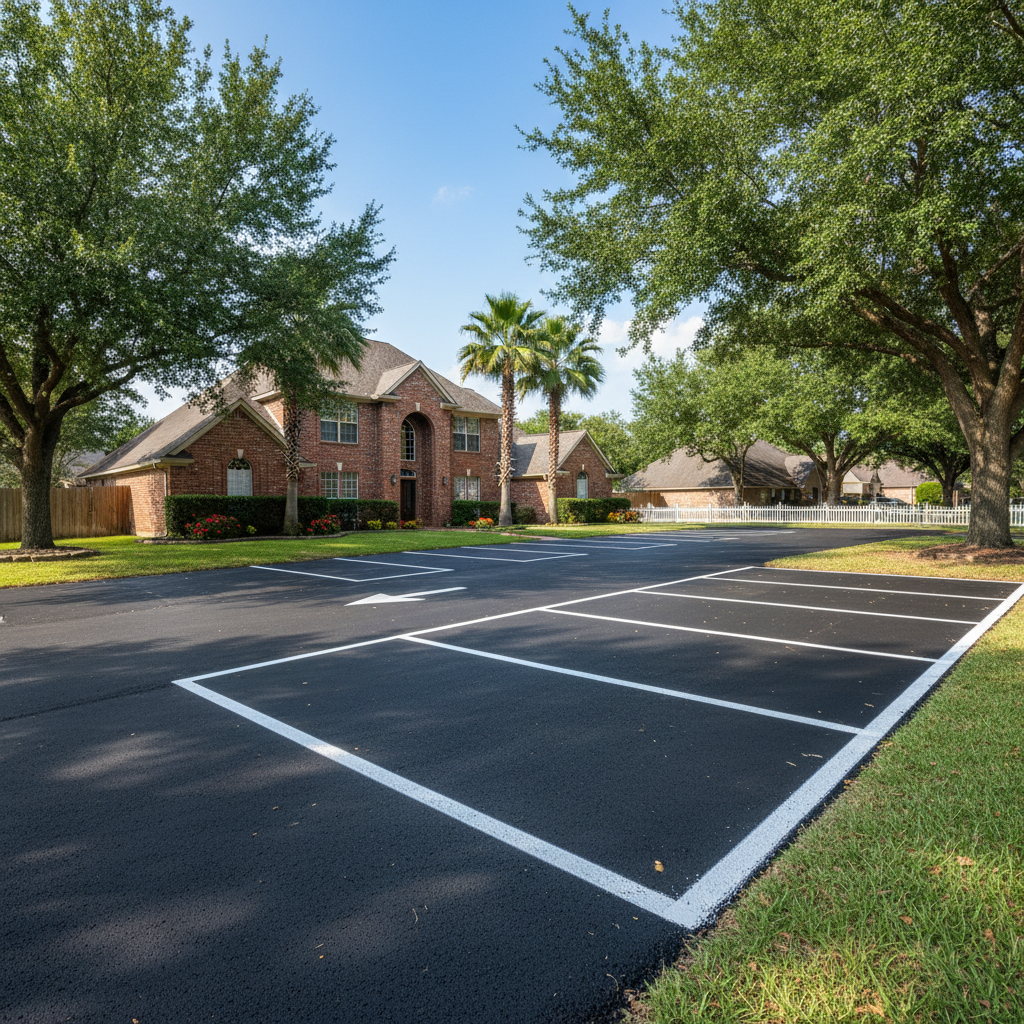
So, you've got asphalt, and odds are, you need lines on it. Whether it's a parking lot, a basketball court, or just some clear markings for your HOA common areas, those painted lines do more than just look nice; they're crucial for safety, keeping traffic flowing, and generally making your property look sharp. But here in Pearland, getting those lines to stick and stay vibrant isn't as simple as just slapping paint down any old day. Our Texas weather really calls the shots, and if you don't time it right, well, you're pretty much just throwing money away.
When's the Best Time to Stripe in Pearland, Anyway?
Honestly, this is probably the question I get asked most often, and for good reason. You want that paint to bond correctly and cure completely, which means you've got to work *with* Mother Nature, not against her. Generally speaking, spring and fall are your safest bets around here. Why's that?
Spring (March to May): Temperatures are usually just right – warm enough for the paint to dry well, but not so scorching that it flashes off too quickly or causes other headaches. We often get a nice mix of sun and moderate humidity. Plus, the ground temperature is usually pretty cooperative.
Fall (September to November): Much like spring, the summer's brutal heat has usually broken by then, giving us those perfect 70-80 degree days. Nights start to cool down, which actually helps with the curing process. You just have to keep an eye out for the occasional early cold front or an unexpected tropical system.
Now, can we stripe in summer or winter? Sometimes, sure, but it gets a lot trickier. Summer's intense heat and humidity can be a real pain. Paint might dry too fast on the surface, leaving it brittle underneath, or the high humidity can just stop it from curing properly. Winter brings cold snaps, and paint just won't cure right when it's too cold. Most manufacturers specify minimum application temperatures, usually around 50°F and rising, and those aren't always met consistently in December or January around here.
Weather Conditions That Make or Break Striping
It's not just the season; it's also about the specific conditions on the day we're doing the job. I'm always checking the forecast like a hawk before we even think about rolling out the equipment. Here's what I'm looking for:
Temperature: Like I mentioned, 50°F and rising is the general rule for both the air and the surface temperature. Too cold, and the paint won't bond. Too hot, and it can dry too fast, which leads to poor adhesion and premature failure. We're talking about the asphalt itself, by the way, not just the air. If the pavement is still chilly from the night, even if the air warms up, we might have to wait a bit.
Humidity: High humidity is a killer for paint drying. If there's too much moisture in the air, the paint takes forever to cure, or it might not cure correctly at all. This is especially true for water-based paints, which are pretty common for striping. Pearland being so close to the Gulf means we're no strangers to high humidity, so it's a constant factor we always have to consider.
Rain: This one's pretty obvious, right? You can't stripe on wet asphalt, and you definitely can't stripe if it's going to rain shortly after. The surface needs to be completely dry, and the paint needs a good few hours – sometimes more – to dry to the touch before any rain hits. We're always watching for those pop-up afternoon showers that are so common in our area. Even a little dew in the morning can delay things until the sun burns it off.
Wind: While not as critical as temperature or rain, strong winds can definitely cause problems. It can blow paint where it shouldn't go, dry the paint too quickly on the sprayer tips, and even make it harder to lay down those perfectly straight lines. Nobody wants crooked lines, do they?
Protecting Your Striping Investment Year-Round
Once those crisp, new lines are down, you want them to last, right? Here's how you can help protect your investment:
Keep it Clean: Dirt, debris, and oil spills can degrade paint over time. Regular sweeping or pressure washing (at a low setting, from a distance) helps keep the surface clean and stops grime from eating away at the paint.
Sealcoating: This is a big one for the longevity of your entire asphalt surface, and that includes the striping. A good sealcoat every few years protects the asphalt from UV rays, water getting in, and oil spills, which in turn helps the paint last longer. We often recommend striping after a fresh sealcoat for the best results, actually.
Address Cracks Promptly: If your asphalt starts cracking, especially in areas where lines are painted, get those cracks filled. Cracks let water get under the surface, leading to more damage that can undermine your striping. We see a lot of foundation and pavement movement around here because of our expansive clay soils, so staying on top of cracks is extra important.
Avoid Harsh Chemicals: Be careful with de-icers or strong cleaning agents. Some chemicals can be abrasive or chemically degrade the paint, causing it to fade or peel prematurely.
Getting your asphalt striping done right isn't just about finding someone with a paint machine. It's about understanding the local conditions, knowing when to schedule, and taking the right steps to protect the work. Here at Pearland Accurate Asphalt, we've been doing this for years, and we know exactly what it takes to get you lines that stand up to our Texas climate. Give us a call when you're ready to make your property shine.