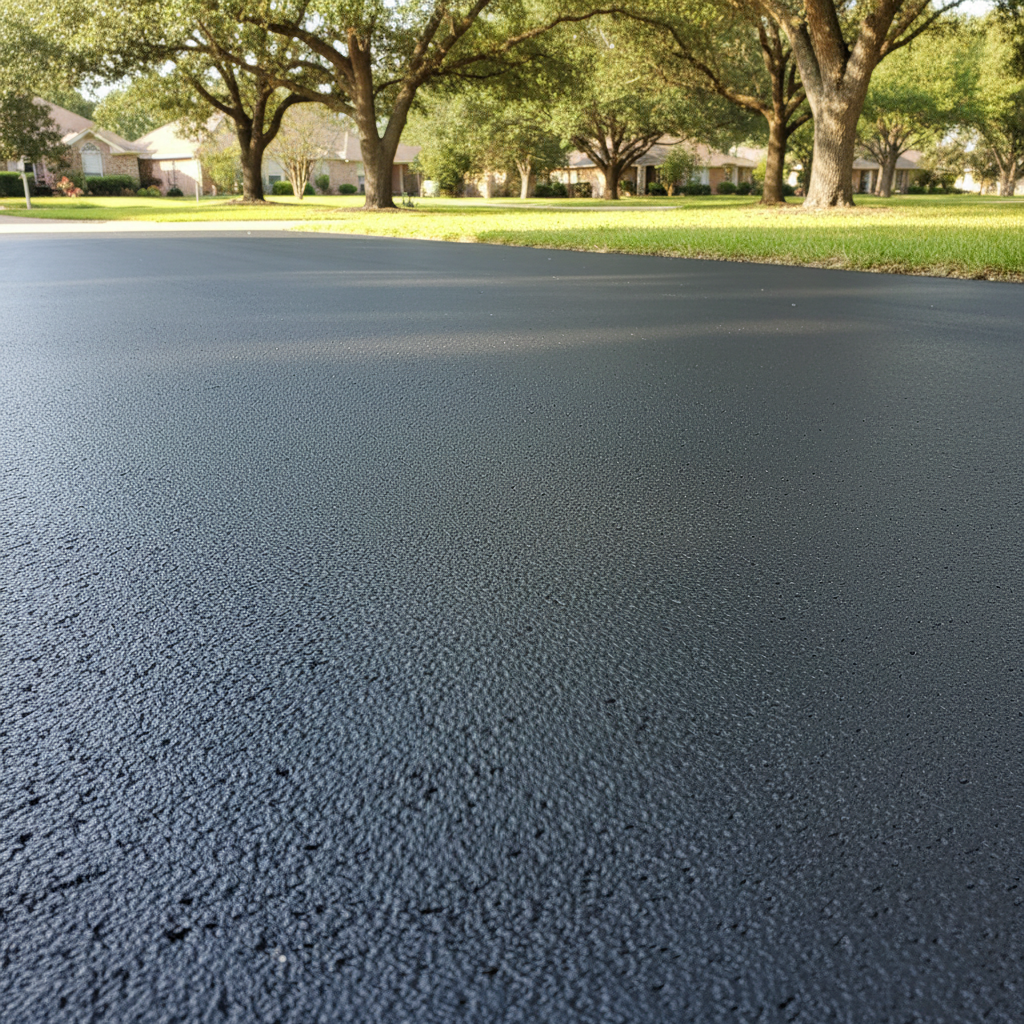
When asphalt driveways look gray and tired during a hot July afternoon in Pearland, Texas, property owners notice the wear. Heavy clay soils in Pearland Accurate Asphalt service areas shift constantly, and combined with relentless sun and torrential downpours, asphalt takes a heavy beating. Sealcoating is a common topic on jobsites throughout the area, and Pearland Accurate Asphalt provides direct answers about Asphalt Sealcoating without any sales fluff.
How often do I actually need to sealcoat my driveway in Pearland?
Most driveways in Pearland, TX need a fresh coat of Asphalt Sealcoating every two to three years. Homeowners in newer subdivisions near Shadow Creek Ranch where the builder grade might have been thin, or driveways sitting in direct sunlight all day, often lean closer to the two-year mark. Shaded lots with mature oak trees can sometimes stretch that to three or four years, but property owners should not push it too far. Once the binder starts wearing away and the aggregate stones are exposed, water gets inside the sub-base.
Can I just grab a bucket of sealer from the big box store and knock it out on a Saturday?
Property owners can buy retail products, but the results usually do not hold up well against the local climate. Those DIY retail sealers are typically water-based emulsions that are heavily diluted and wear off after one heavy rainy season. Pearland Accurate Asphalt uses commercial-grade coal tar and high-end asphalt emulsion sealers for Asphalt Sealcoating that bond with the pavement and resist oil spills. In addition, the surface preparation matters more than the actual spraying. If pressure washing does not remove microscopic organic debris and blow out every crack, that DIY seal will peel right off the pavement.
How long do I have to keep my cars off the driveway after it's done?
Foot traffic should stay off the surface for about 24 hours, and vehicles must remain parked on the street for at least 48 hours following Asphalt Sealcoating. During the middle of August when humidity sits at ninety percent, property owners should give the surface an extra half day just to be safe. Fresh sealer might look dry on top, but the bottom layers take time to cure fully. Driving on the surface too soon will scuff and tear the fresh coating, leaving unwanted tire tracks baked into the black finish.
Will sealcoating fill in the cracks in my asphalt?
Sealcoating does not fill large structural cracks in asphalt. Asphalt Sealcoating acts as a protective layer for asphalt, shielding the surface from UV rays and water penetration, but it is not a structural fix. Driveways with cracks wider than a quarter-inch need hot-pour rubberized crack filler applied before any sealcoat goes down. Otherwise, water will still find its way into the sub-base, leading to potholes by next spring.
What time of year is best to sealcoat in our climate?
Spring and fall are ideal times for Asphalt Sealcoating, though application can occur through most of the summer as long as crews watch out for afternoon pop-up thunderstorms. Surface temperatures must stay between 50 and 90 degrees with zero rain in the forecast for at least 24 hours. If rain hits fresh sealcoat before it sets, the material washes down street gutters.
Does sealcoating make the driveway slippery when it rains?
Pavement can get slick right after application, especially during the first few summer showers when oil and dust rise to the surface. To combat this issue, professional crews often mix fine silica sand into the sealer during Asphalt Sealcoating. This addition provides traction so people do not slip when walking on the driveway after a sudden Gulf Coast downpour. For questions about specific pavement conditions in Pearland, Texas, property owners can contact Pearland Accurate Asphalt for an evaluation.